
Types of Bathroom Basins: Undermount, Stainless Steel & Modern Bathroom Sink Designs
Bathroom basins might be one of the smallest fixtures in the room, but they do a lot of work. They’re the most-used touchpoint in the bathroom, they set the tone for the vanity (and often the whole space), and they quietly influence how easy the room is to clean and live with.
If you’re weighing up different bathroom basins - from an undermount sink for a sleek modern look to a stainless steel sink for durability - the best choice comes down to how you use the space, what benchtop you’re pairing it with, and how much maintenance you want to sign up for.
Here’s a practical guide to the main bathroom basin types you’ll see in modern Australian bathrooms, plus the trade-offs that actually matter.
Why Bathroom Basins are a Key Design Element
A basin is both functional and aesthetic. It needs to handle daily water exposure, skincare and makeup mess, cleaning chemicals, and the occasional dropped bottle - while still looking good doing it. The right bathroom sink (or wash basin) can:
● make a small bathroom feel more spacious
● complement your vanity and tapware style
● reduce cleaning time (especially around joins and edges)
● improve usability (depth, splash control, and placement)
In other words: a bathroom basin isn’t just a “pick one and move on” item. It’s worth choosing intentionally.
Bathroom Sink vs Bathroom Basin: What’s the Difference?
In Australia, the terms bathroom sink, bathroom basin, and wash basin are often used interchangeably. In day-to-day conversations:
● “Bathroom sink” is common in general use.
● “Bathroom basin” shows up more in retail, design, and specification language.
● “Wash basin” can sound slightly more formal, but it means the same thing. What matters isn’t the label - it’s the basin style, installation method, and material, because that’s what affects durability, cleaning, and how the vanity and benchtop are detailed.
Undermount Basins: A Popular Modern Choice
If you’re aiming for a clean, seamless look, an undermount basin is one of the most popular options in modern bathroom design.
What is an undermount sink?
An undermount sink (or undermount basin) is installed beneath the benchtop. Instead of sitting on top of the counter, the rim is hidden underneath, and the benchtop material runs right up to the cut-out.
Why undermount basins are popular
Undermount basins are popular because they:
● create a sleek, minimalist look
● make it easy to wipe water and product straight into the basin
● reduce visual clutter on the vanity
● suit higher-end benchtops and modern cabinetry profiles
Pros and cons of undermount basins
Pros
● Cleaner lines, modern aesthetic
● Easy countertop cleaning (no rim lip to scrub around)
● Pairs well with stone, solid surface, and some laminate benchtops
Cons
● Installation is more precise, which can increase labour cost
● The cut-out needs to be finished neatly (and sealed properly)
● The join between basin + benchtop is critical for long-term performance. If you’re choosing undermount basins, spend time on the detailing - that’s where longevity is won or lost.
Stainless Steel Basins & Sinks
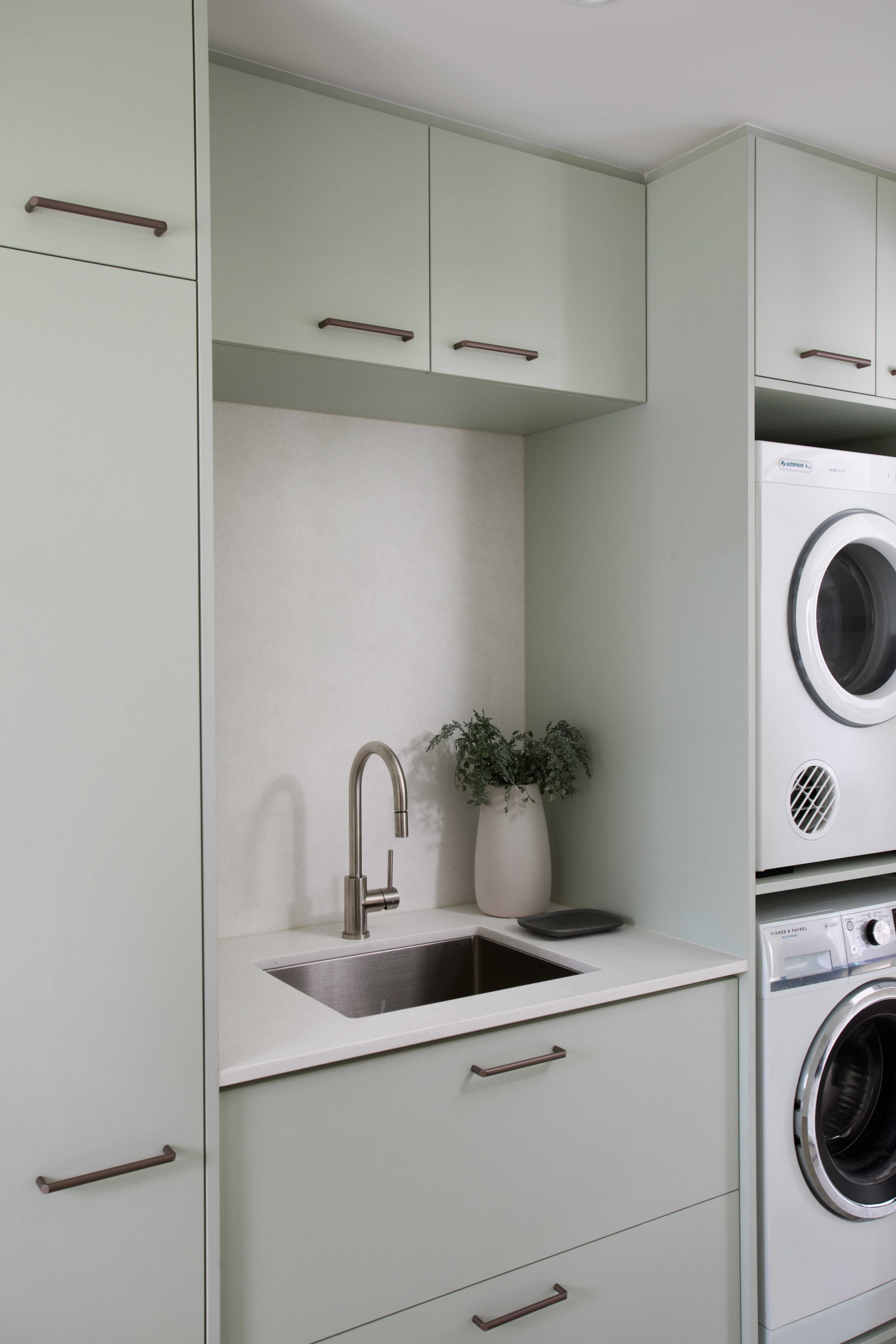
A stainless steel sink is often associated with kitchens, but stainless steel basins have a place in bathrooms too - especially in commercial settings, utility bathrooms, and certain contemporary designs.
Why choose a stainless steel basin?
Stainless steel basins are valued for:
● durability (they can take knocks and keep going)
● corrosion resistance
● easy maintenance (no sealing, no special cleaning products)
● a clean, practical look that suits minimalist or industrial interiors
Where stainless steel bathroom sinks work best
You’ll commonly see a stainless steel basin in:
● commercial bathrooms and amenities
● healthcare settings
● workshop/utility bathrooms
● modern industrial-style homes (especially paired with concrete, timber, or matte black tapware)
Trade-offs to consider
Stainless steel can show:
● water spots and fingerprints (depending on finish)
● light scratches over time (often cosmetic)
● dents if a thin gauge is used. If you like the look, choose a finish that suits real life - a brushed finish generally hides marks better than a highly reflective polished finish.
Ceramic & Composite Bathroom Basins
For many homes, ceramic remains the go-to for bathroom basins - and for good reason. It’s classic, widely available, and performs well for everyday use.
Ceramic basins
Ceramic bathroom basins are popular because they offer:
● a smooth, glossy finish that’s easy to wipe clean
● broad style options (from classic to modern)
● good resistance to stains and everyday bathroom chemicals. The main downside is that ceramic can chip if something heavy is dropped, and chips are hard to “repair invisibly”.
Composite basins (and other engineered options)
Composite and engineered basin materials can deliver:
● matte finishes (popular in modern bathrooms)
● softer, more “design-forward” shapes
● colour options beyond white. They can be a great choice for modern bathrooms - just check care instructions. Some matte finishes show marks differently to glossy ceramic and may need gentler cleaning to stay looking fresh.
Choosing the Right Basin for Your Bathroom
With so many bathroom basins available in Australia, it helps to narrow down your choice based on the practical constraints of your space.
1. Bathroom size and vanity depth
A tiny powder room has different needs to a family bathroom. Consider:
● basin width (does it leave bench space for soap/toothbrushes?)
● basin depth (will it splash?)
● clearance to mirrors, storage, and doors
2. Benchtop material and installation method
Your benchtop influences what’s feasible.
● If you want an undermount basin, confirm your benchtop material and fabricator can support it and finish the cut-out properly.
● If you’re working with a tight budget or a simpler benchtop material, a top-mount or integrated option may be more straightforward.
3. How much cleaning tolerance you have
Be honest about what you’ll keep up with.
● If you want the easiest wipe-down, undermount can be great.
● If you want the easiest “set and forget” material, ceramic is usually a safe bet.
● If your space is high-traffic or commercial, stainless steel sinks and basins can be the most forgiving.
4. Tapware and usability
Your basin needs to match your tap choice and placement:
● wall-mounted vs bench-mounted taps
● reach into the basin (to reduce splashing)
● clearance for hands, face-washing, and filling containers
This is an area where a basin that looks good online can be annoying in real life if the tap and bowl proportions are off.
Comparing Basin Types: Quick Guide
Here’s a simple way to compare common basin options when you’re choosing between bathroom sinks.
Basin type | Best for | Key advantage | Main watch-out |
Undermount basin | Modern bathrooms, minimalist vanities | Seamless look + easy bench wipe-down | Installation + sealing detail matters |
Stainless steel basin | Commercial, utility, industrial styles | High durability + low fuss | Can show water spots/scratches |
Ceramic basin | Most residential bathrooms | Classic, easy-clean finish | Can chip if impacted |
Composite/engineered basin | Design-led bathrooms, matte trends | Modern shapes + matte finishes | May need gentler cleaning |
Finding the Right Basin for Function and Style
Bathroom basins are one of those choices that feels small - until you live with it every day.
If you want clean lines and a modern look, an undermount sink can be a great fit, especially with the right benchtop and good installation. If you want something tough and practical, a stainless steel sink or basin can be the most forgiving. And if you want a proven, easy-clean classic, ceramic bathroom basins remain a safe, long-wearing option.
Whatever you choose, aim for the balance that suits your household: style, durability, and the kind of maintenance you’ll actually do.